King Abdullah Financial District (KAFD): The Complete Guide to Riyadh’s Business Hub

Key Takeaways
A major business destination: KAFD combines Grade A offices, financial institutions, regional headquarters, digital infrastructure, and professional networks within one connected district.
More than a workplace: The district brings together the KAFD Grand Mosque, Financial Plaza, PIF Tower, Conference Centre, Al Wadi, hotels, residences, restaurants, retail, and cultural spaces.
Built for connected urban living: Metro access, 42 climate-controlled skywalks, parking, and shuttle services make it easier to move around, while further mobility, hospitality, and retail developments are underway.
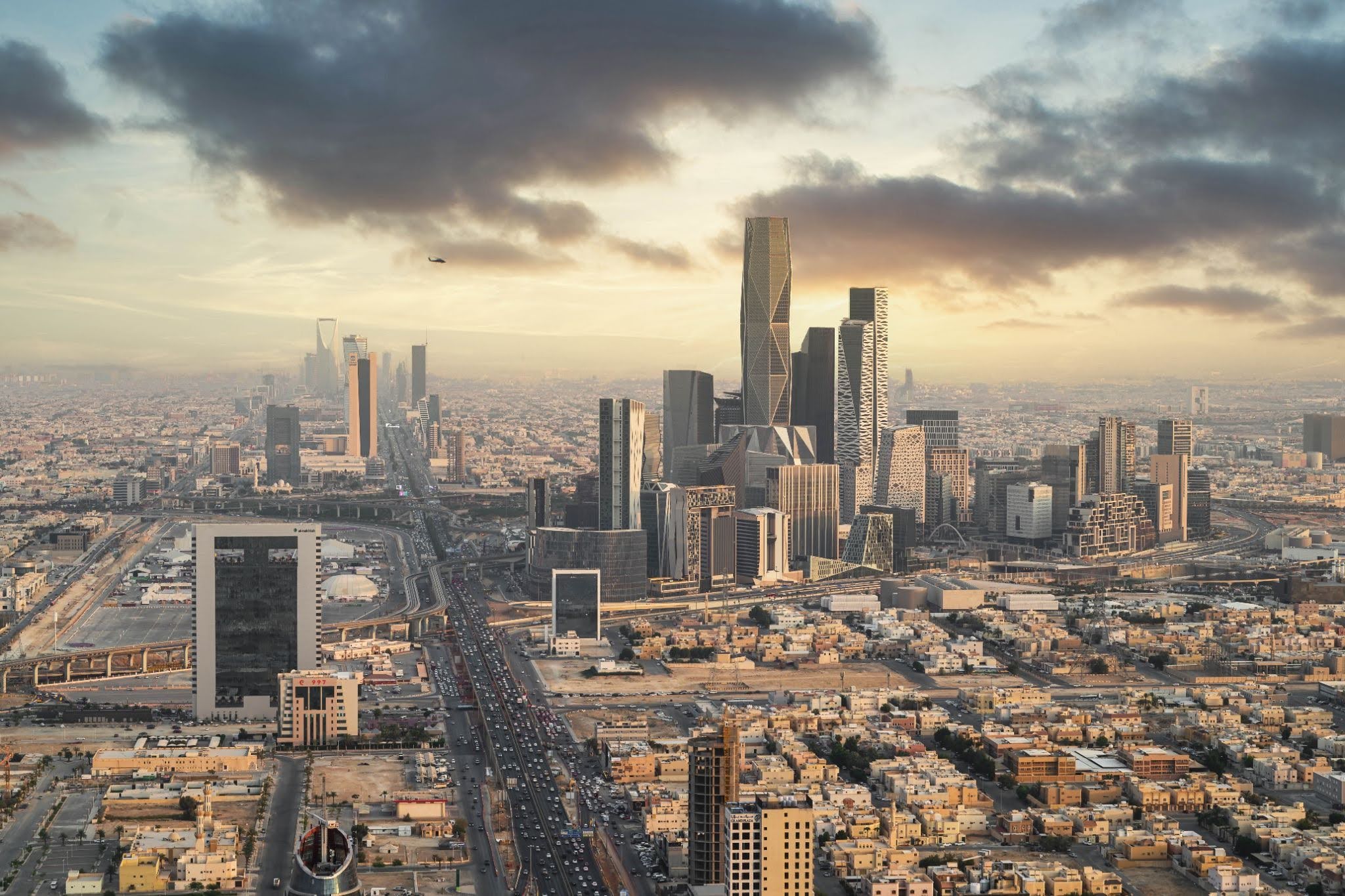
Located in northern Riyadh, King Abdullah Financial District (KAFD) is a mixed-use destination spanning 1.6 million square metres across 95 buildings and five asset classes. The district brings together commercial, residential, hospitality, retail, and public spaces within a single managed environment.
The district is already operational, with companies, residences, hotels, restaurants, and public facilities in use, while additional hospitality, retail, and mobility projects continue to expand its offering.
KAFD at a Glance
Feature | Details |
Location | Northern Riyadh, Saudi Arabia |
Land area | 1.6 million square metres |
Buildings | 95 |
Office space | 900,000+ square metres |
Residential units | 5,000+ |
Asset classes | Offices, retail and F&B, residential, hotels and entertainment |
Metro | Dedicated KAFD Metro Station |
Architecture | More than 25 international architecture and design firms |
Skyways | Climate-controlled pedestrian connections |
Business community | 140+ commercial tenants and 20 regional headquarters |
KAFD is positioned as a managed district rather than a collection of individual buildings, with infrastructure and services planned around the needs of businesses, residents, and visitors.
Why Are Businesses Choosing KAFD?
For companies establishing or expanding their presence in Riyadh, the combination of premium offices, a growing professional community, digital infrastructure, and convenient transport creates a strong business environment.
A Concentration of Financial and Professional Businesses
Financial services remain central to the district's identity. The Financial Plaza accommodates banks, funds, and other financial institutions, while the wider tenant community extends across technology, consulting, media, consumer businesses, and other sectors.
The current business community includes more than 140 commercial tenants and 20 regional headquarters. Recent additions include OpenText, which opened its Middle East regional headquarters in February 2026, and NextEra, which established its headquarters in May 2026.
This concentration places businesses close to financial institutions, technology companies, professional services firms, and other organisations operating across the Saudi market.
Grade A Commercial Space
More than 900,000 square metres of office space are available across the district, supported by advanced infrastructure and technology.
The Financial Plaza alone occupies approximately 430,000 square metres of office space and is dedicated to financial institutions, including banks and funds. Dining and retail facilities are also incorporated at ground level, providing spaces for business networking events and professional gatherings.
A Connected Business Location
Direct access to Riyadh Metro, climate-controlled pedestrian connections, and internal mobility services make it possible to move between offices, residences, hotels, retail areas, and public spaces without relying entirely on private vehicles.
The dedicated KAFD Metro Station opened in 2024 and intersects three major metro lines. It also connects with buses, shuttle services, and pedestrian walkways.
Business Facilities Within the District
Corporate requirements extend beyond office space. Conference facilities, hotels, restaurants, retail outlets, and public areas provide options for meetings, events, accommodation, and day-to-day services.
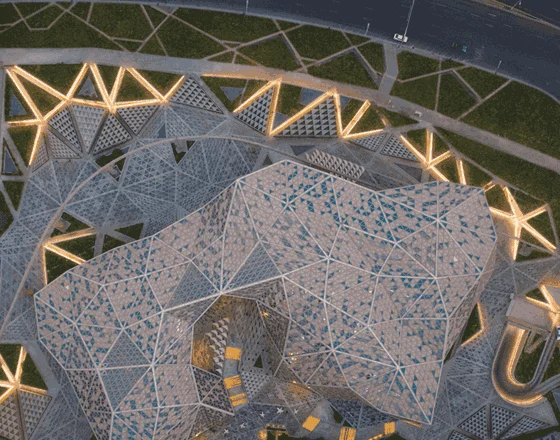
The KAFD Conference Centre is a key example, offering a 600-seat auditorium, banquet facilities, executive boardrooms, and outdoor spaces within a 28,000-square-metre venue.
A Growing Professional Community
The concentration of businesses and institutions creates opportunities for professional networking, client meetings, and collaboration across industries.
Recent headquarters established by companies such as OpenText, NextEra, PepsiCo, and Bain & Company also demonstrate the range of sectors represented within the district.
What Is Inside KAFD?
Several distinctive landmarks shape the district's architectural and urban identity, spanning commercial, cultural, religious, public, and transport functions.
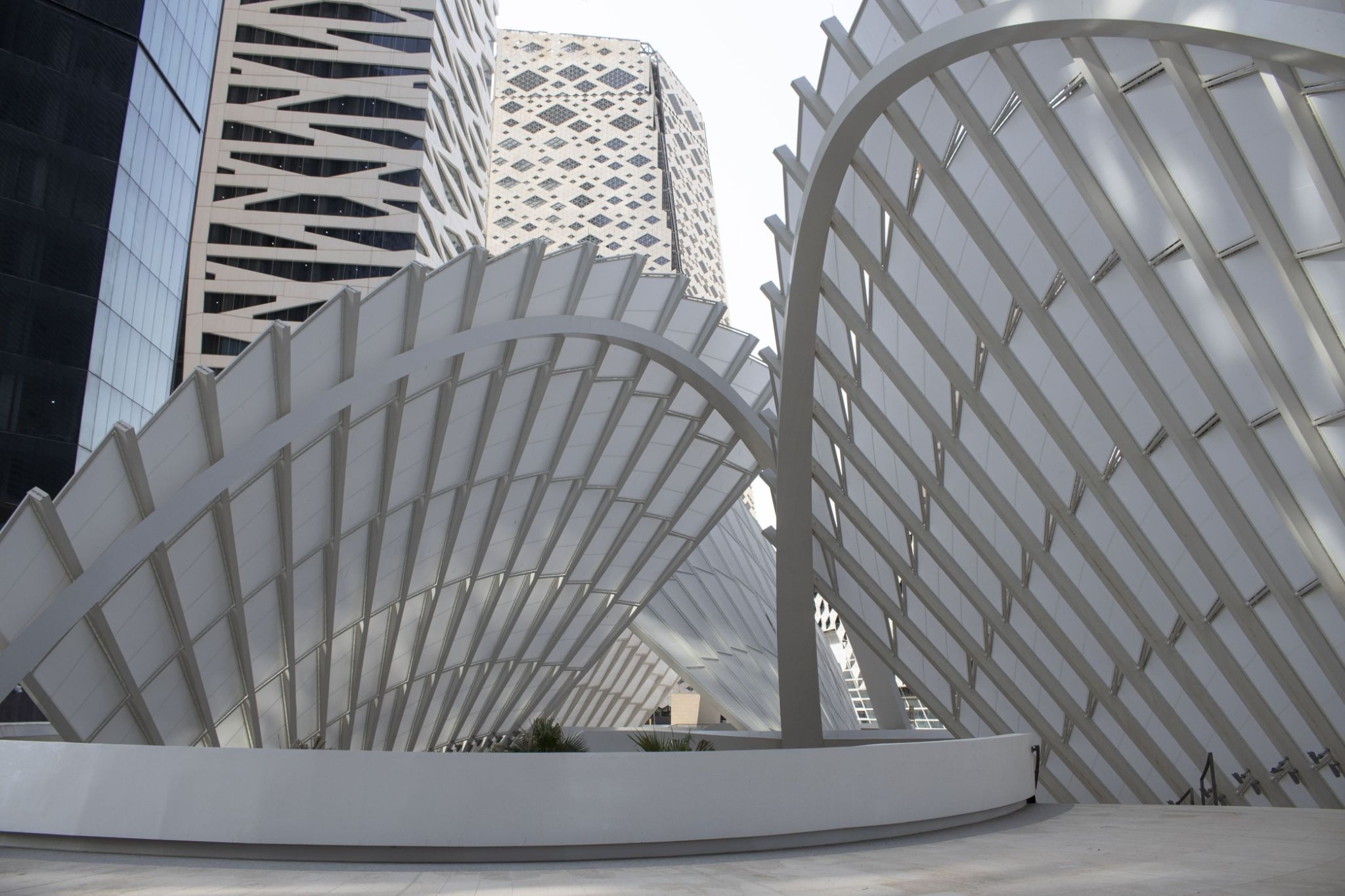
Financial Plaza
The Financial Plaza is one of the district’s principal business destinations. Designed by Henning Larsen Architects, it is formed around six of KAFD’s tallest towers and provides approximately 430,000 square metres of office space, according to KAFD’s landmark information.
The plaza is primarily dedicated to financial institutions and includes dining, retail, and networking areas at ground level. Its four large structural “fans” are among its most recognisable architectural features.
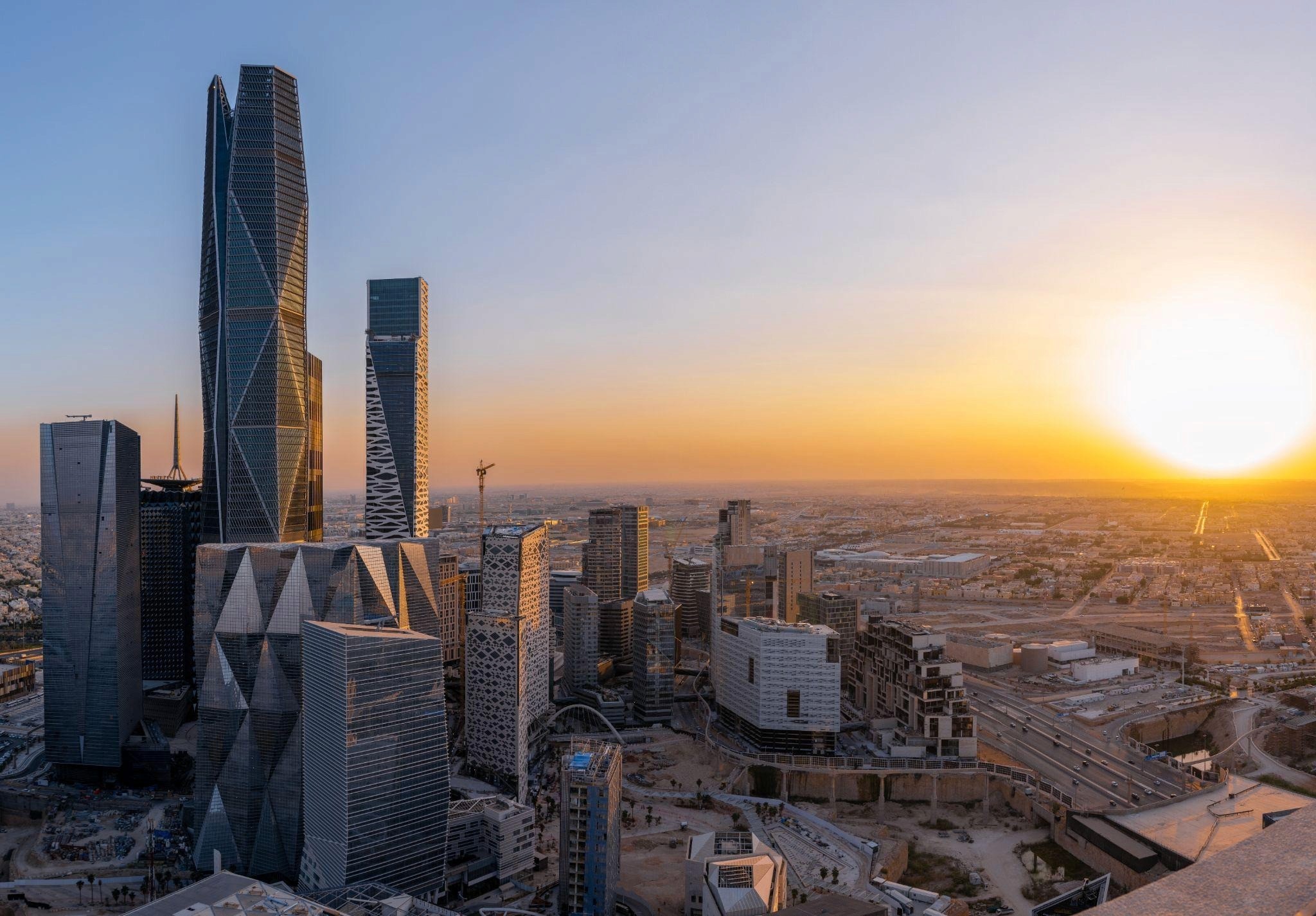
PIF Tower
Standing at 385 metres across 80 floors, PIF Tower is the tallest building in Riyadh. Designed by HOK in collaboration with Omrania & Associates, it contains offices as well as dining facilities and an auditorium.
Its design draws inspiration from crystals found in Saudi Arabia’s wadis, while features such as solar-control systems and external shading contribute to its environmental performance.
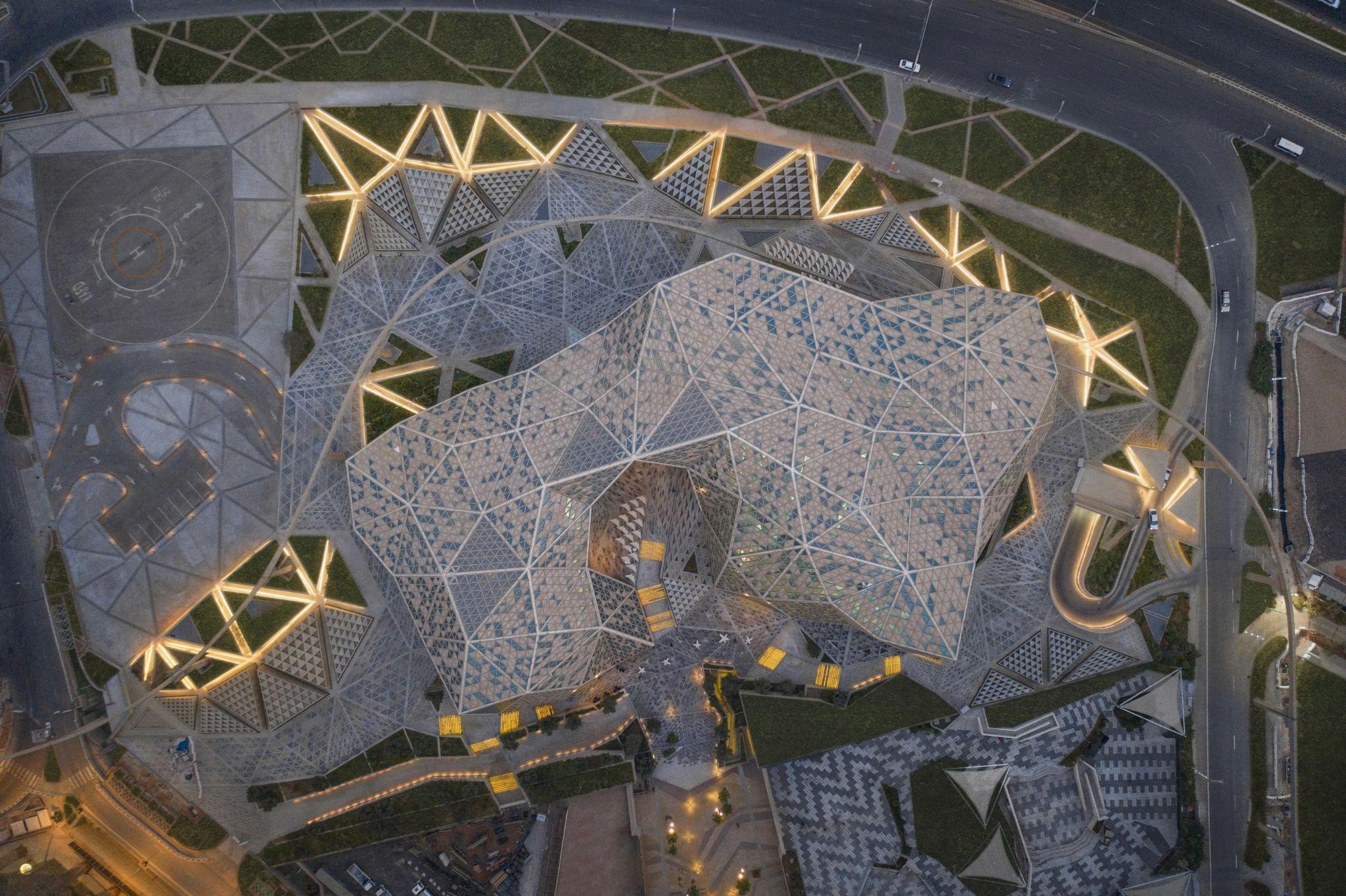
KAFD Conference Centre
A 28,000-square-metre event venue designed by Skidmore, Owings & Merrill (SOM). The LEED Gold-certified facility includes a 600-seat auditorium, a 1,215-square-metre banquet hall, executive boardrooms, outdoor plazas, and other flexible event spaces.
It can accommodate conferences, exhibitions, gala dinners, product launches, award ceremonies, cultural events, and other large gatherings. The banquet hall can accommodate up to 600 seated guests or 800 standing guests.
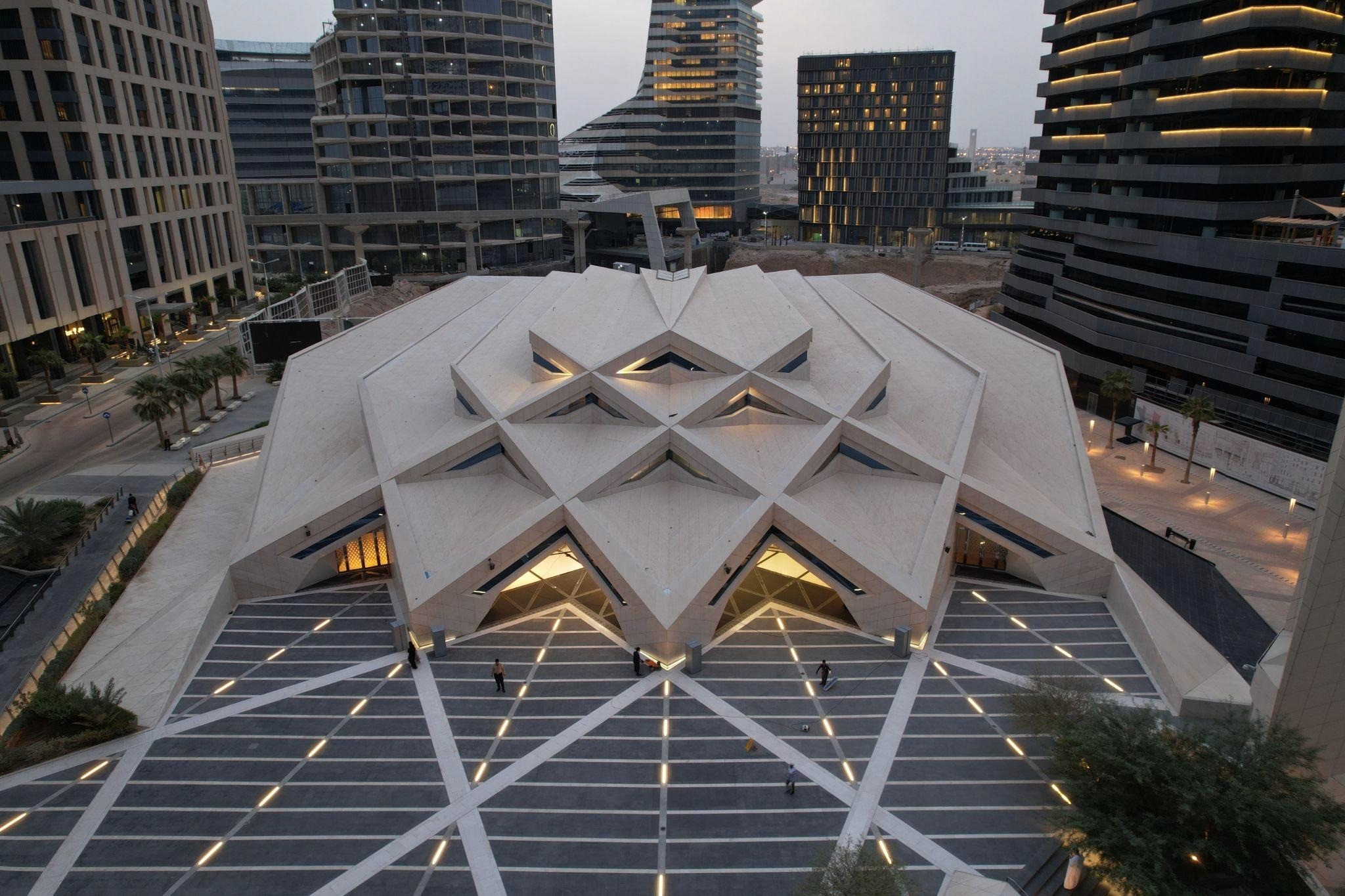
KAFD Grand Mosque
The KAFD Grand Mosque is one of the district’s most distinctive landmarks. Designed by Omrania & Associates, its form is inspired by the desert rose found across the Arabian Peninsula.
The structure is notable for its column-free prayer space and two sculpted 60-metre minarets. It can accommodate more than 1,400 worshippers. Its geometric design also incorporates triangular forms found throughout the wider district.
The mosque has received several architectural awards, including the International Architecture Awards’ Religious Architecture Prize in 2020, the Abdullatif Al Fozan Award for Mosque Architecture in 2021, and the King Salman Charter for Architecture and Urbanism Award in 2024.
Al Wadi
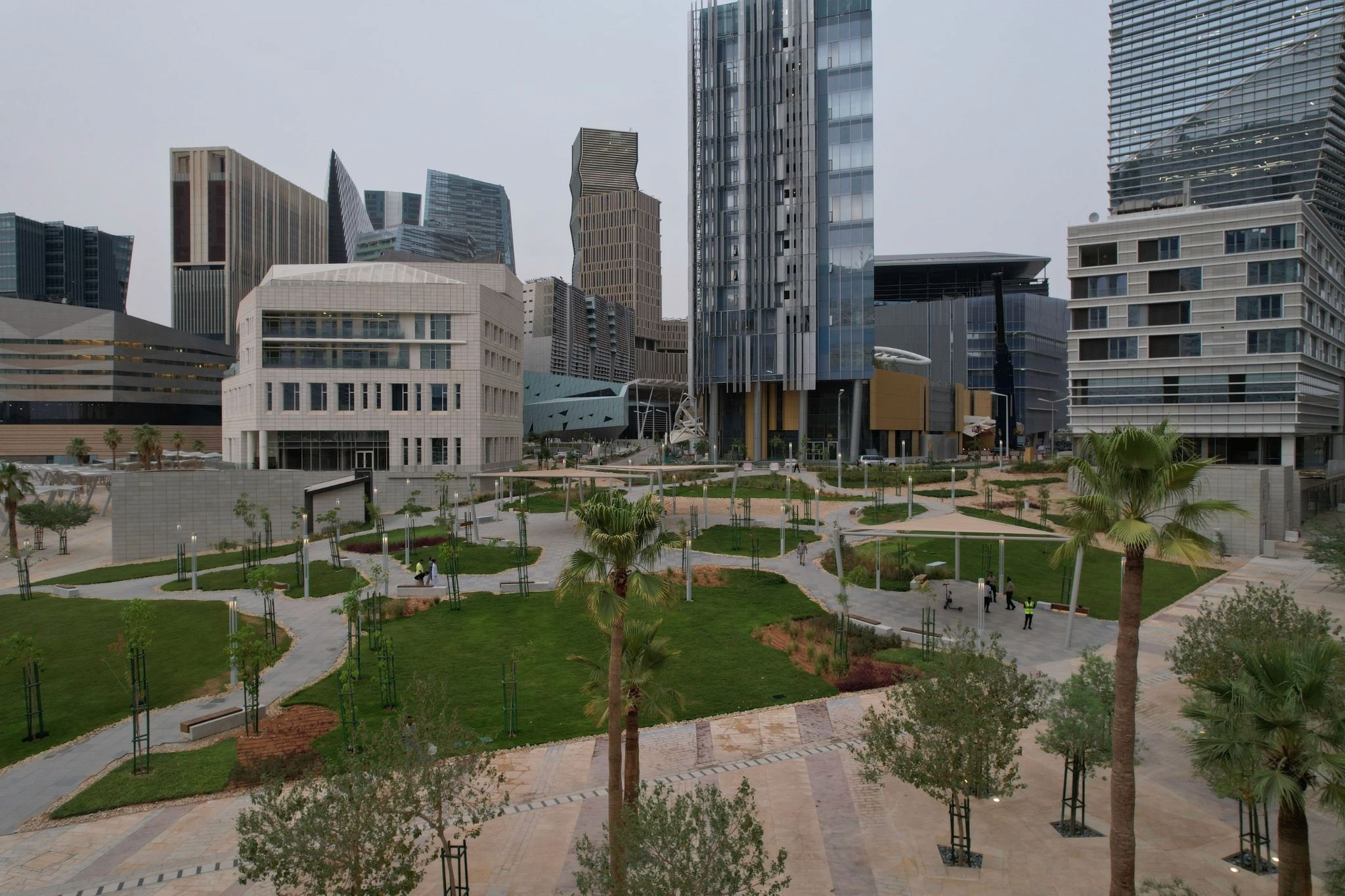
Al Wadi is a landscaped, pedestrian-focused public space inspired by the valleys of the Saudi desert. It sits 5.5 metres below street level, allowing natural airflow to create a cooler environment.
The space is designed to host temporary activations, events, and retail concepts, providing an open area within the dense urban environment.
KAFD Metro Station
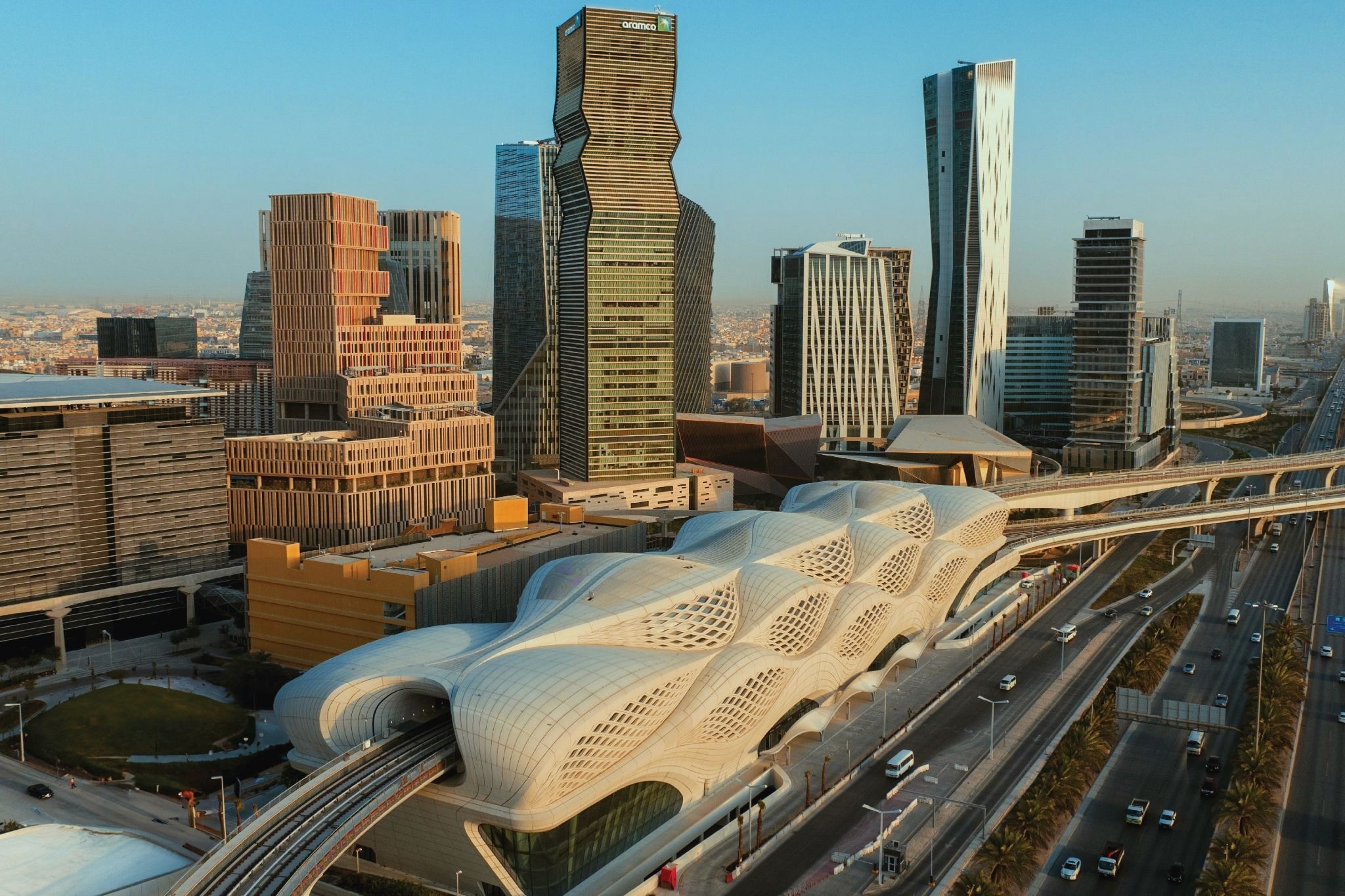
The KAFD Metro Station provides direct access to Riyadh’s metro network and is one of the district’s most recognisable structures. Designed by Zaha Hadid Architects, the 45,000-square-metre station combines transport infrastructure with distinctive architectural design.
Opened in 2024, it provides a direct public transport connection for employees, residents, and visitors travelling to and from the district. A driverless monorail system is also being developed within the district, with operations expected to begin in 2027.
KAFD Community Park
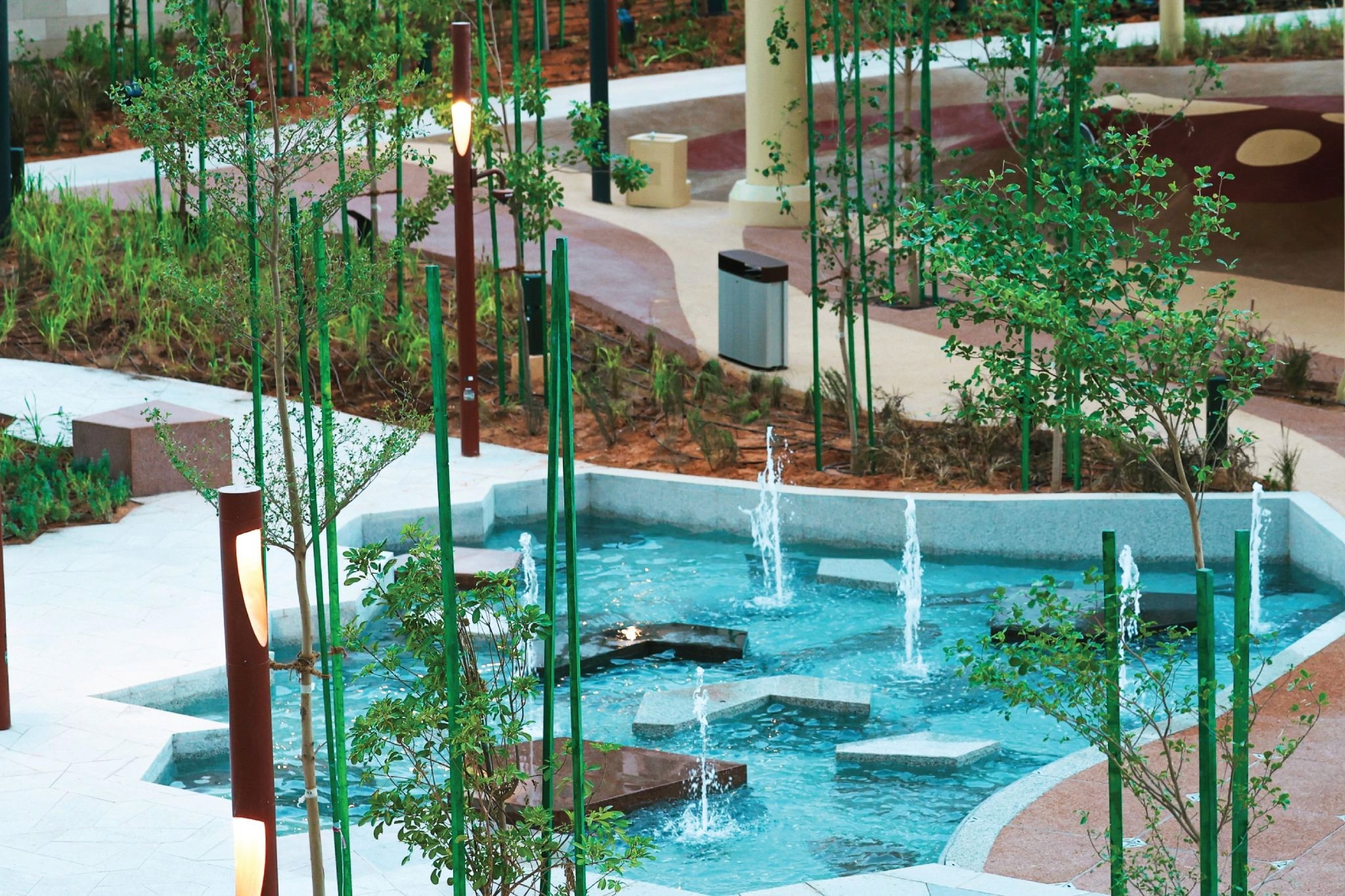
Located between Buildings 1.13 and 3.03, KAFD Community Park provides landscaped areas and open spaces within the district.
The park is designed to support community interaction and outdoor activity while incorporating measures such as natural shading, energy-efficient lighting, and biological rainwater treatment.
Business, Hospitality and Lifestyle in KAFD
The wider offering extends beyond these landmarks, with workplaces, accommodation, residences, dining, retail, and entertainment distributed throughout the district.

Offices and Commercial Buildings
More than 900,000 square metres of office space are available across the district. The commercial community includes organisations from financial services, technology, consulting, media, consumer businesses, and other sectors.
The buildings are supported by digital infrastructure and smart-city systems, alongside access to the district's wider amenities.
Hotels and Hospitality
Several hotels now operate within the district, including Kimpton KAFD Riyadh, which opened in September 2025, and W Riyadh – KAFD, which opened in April 2026.
Further properties are planned. Atheel KAFD Hotel is scheduled to open in the fourth quarter of 2026, while a 450-key Hilton hotel is also planned within the district.
This KAFD hotel offering supports business travellers, conference delegates, residents, and leisure visitors.
Residences
Residential development forms one of the district's five asset classes. More than 5,000 apartment units are included in the current residential offering, allowing residents to live close to offices, hotels, restaurants, retail, and public spaces.
Restaurants and Cafés
Dining options range from restaurants and cafés to more specialised food and beverage concepts. THE303 is one of the established dining destinations, while the wider district continues to add restaurants and other F&B offerings.
Benoit and Il Baretto have also been recognised in the MICHELIN Guide Saudi Arabia, adding established names to the dining mix.
Retail, Shopping and Services
Retail and F&B form one of the district's five principal asset classes. The offering includes shopping, dining, wellness, and other services intended to support employees, residents, and visitors.
Further retail concepts are being introduced as additional parts of the district become operational.
Art, Culture and Entertainment
Cultural programming adds another dimension to the district's public spaces. Events and activations have included art installations, fashion events, concerts, national celebrations, and exhibitions.
The district has also hosted major programmes such as Noor Riyadh and 100 Saudi Brands, alongside business and industry events.
How Easy Is It to Get Around KAFD?
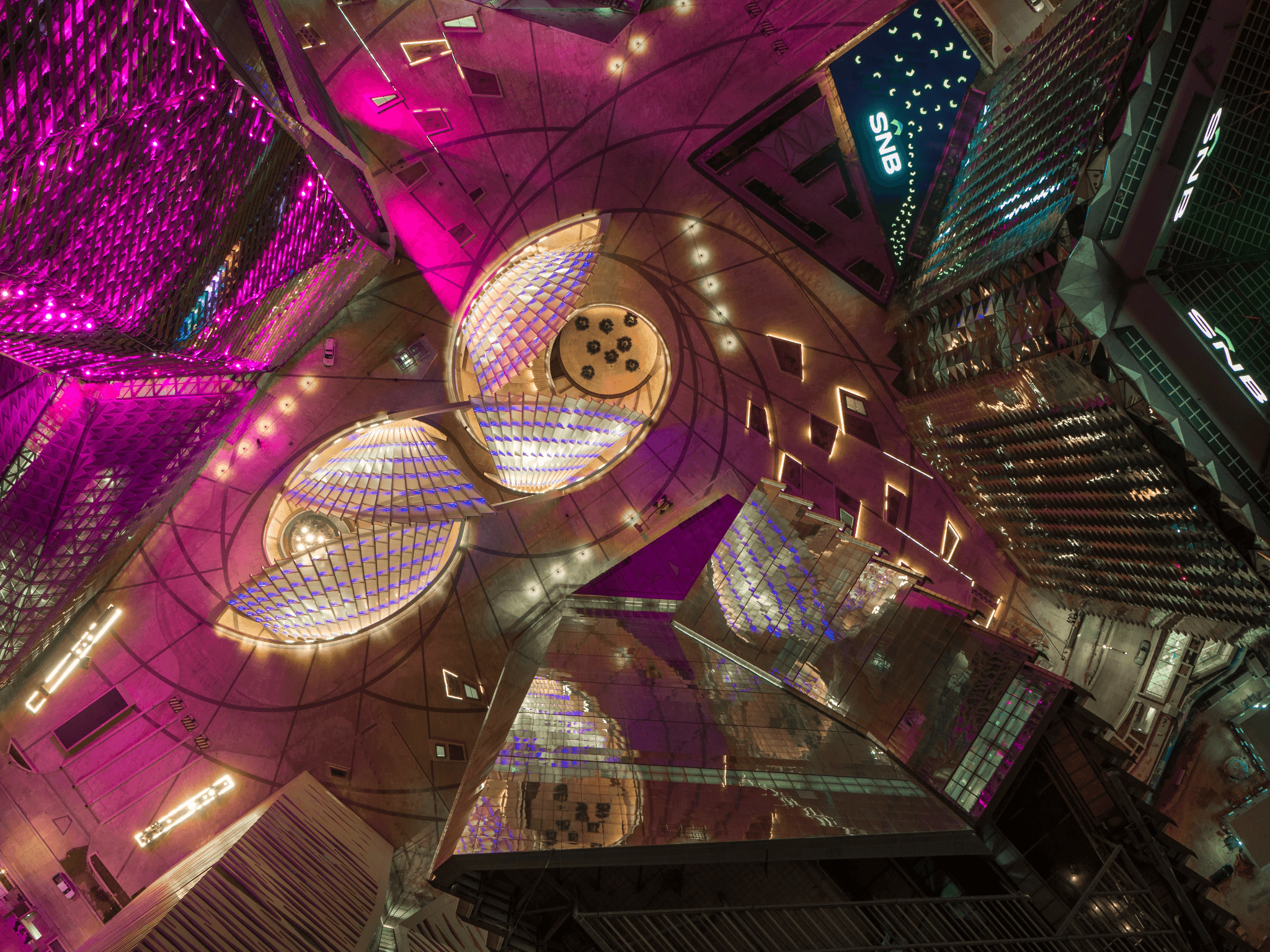
The district follows a “10-minute city” approach, with offices, retail, hospitality, and other essential destinations designed to be accessible within a walkable environment.
Climate-Controlled Skywalks
KAFD has 42 climate-controlled skywalks connecting buildings across the district. The network extends for 15.46 kilometres and has been recognised by Guinness World Records as the world’s largest continuous pedestrian skyway network.
These connections provide covered pedestrian routes between buildings and help people move around the district while limiting exposure to Riyadh’s outdoor climate.
Metro
The KAFD Metro Station connects the district directly with Riyadh’s wider metro network and provides an alternative to private vehicles for employees and visitors.
Parking and Shuttle Services
Parking facilities are available throughout the district. Dedicated tenant parking includes more than 4,000 shaded spaces, with shuttle buses helping employees travel between parking areas and key office destinations.
Monorail
An autonomous monorail system is being developed as part of the district’s future internal mobility network. The planned system consists of six trains operating along a circular route with six stations connecting offices, retail, and leisure areas. It is designed to integrate with the Riyadh Metro and is expected to launch in 2027.
Architecture and Urban Design
More than 25 international architecture and design firms have contributed to the district, creating a skyline that combines contemporary architecture with references to Saudi Arabia’s natural landscape and architectural heritage.
The buildings use a range of geometric forms and shading systems designed to respond to Riyadh’s climate. The result is a dense vertical development where offices, residences, hospitality, and public spaces are integrated rather than separated into individual zones.
Several buildings have received international recognition for their design, including PIF Tower and the KAFD Grand Mosque.
Sustainability and Smart Infrastructure
Sustainability is incorporated at both building and district levels. KAFD is recognised by the US Green Building Council as the world’s only LEED Platinum-certified Neighborhood Development, with more than 49 LEED certifications across the destination.
The district also incorporates smart-city technologies and digital infrastructure designed to support building operations, connectivity, and the experience of businesses, residents, and visitors.
KAFD was the first neighbourhood in the Middle East and North Africa to achieve WiredScore’s Global Smart Neighborhood Certification, recognising its digital infrastructure and smart-building capabilities.
Its sustainability measures extend to mobility, pedestrian infrastructure, and building design, supporting a lower-impact urban environment.
What Makes KAFD Different from a Conventional Business District?
The district brings several functions together within a single managed environment. A company based there can be close to financial institutions and other businesses, while employees and visitors have access to hotels, restaurants, cafés, retail, event venues, public spaces, and transport connections.
The combination of commercial infrastructure and everyday amenities also supports a more integrated working environment. Employees can move between buildings through climate-controlled skyways, commute by metro, attend events at the Conference Centre, meet clients at restaurants, and access services without necessarily leaving the district.
For companies establishing a regional headquarters or expanding their operations in Riyadh, this combination of business infrastructure, connectivity, and supporting amenities is a key part of the district’s appeal.
The Future of KAFD
KAFD is already an operational business and lifestyle destination, but development is continuing across its commercial, hospitality, retail, and mobility offerings.
The planned monorail will add another layer to the district’s internal transport network, while additional hotels, restaurants, retail concepts, and other amenities will continue to expand what is available within the district.
Its growing tenant base and continued addition of commercial and lifestyle facilities are also strengthening its role within Riyadh’s evolving business landscape.
Industry Insights
Lifestyle
Community News
Bassam brings a rare mix of finance and hospitality sales to the world of commercial real estate, with roots at InterContinental, Rotana, and Abu Dhabi National Hotels. That cross-functional foundation gives him a well-rounded perspective on what businesses and clients truly need from a workspace.
Table of Contents
Frequently Asked Questions
What is the best time to visit the district?
The cooler months, generally from October to March, are more comfortable for spending time outdoors and exploring the district's public spaces. Indoor venues, restaurants, and offices operate throughout the year.
Can visitors enter KAFD without working or living there?
Yes. KAFD is not restricted to employees and residents. Visitors can access its restaurants, hotels, public spaces, events, and other destinations, subject to the individual venue's access requirements.
Is the district suitable for families?
Yes. The district's mix of public spaces, restaurants, cafés, retail, hospitality, and cultural activities provides options for families as well as professionals.
Can the area be reached from King Khalid International Airport?
Yes. KAFD is connected to the wider Riyadh road network, allowing visitors arriving at King Khalid International Airport to reach the district by road. The journey time varies depending on traffic and the route taken.
Is KAFD a good location for regional headquarters?
The concentration of regional headquarters, Grade A offices, financial institutions, transport links, and supporting business facilities makes the district suitable for organisations establishing a regional or Saudi headquarters.
Related Articles
KAFD Conference Center: Riyadh’s Premier Venue for Business Events
Community News
Meeting and Events

KAFD Metro Station: Game-Changer for Businesses in the Area
Sustainability
Community News
The Top-Rated KAFD Hotels: Luxury Stays in Saudi's Business Hub
Lifestyle
Meeting and Events
Saudi Vision 2030: Empowering the Kingdom Through Innovation and Sustainability
Industry Insights
Sustainability