Private Office vs Coworking Space in Riyadh

Key Takeaways
Private offices suit teams needing a stable setting for focused and sensitive work.
Coworking spaces suit professionals seeking greater flexibility without dedicated capacity.
KAFD can be a practical workspace location for businesses that value connectivity and access to nearby amenities.
The best option depends on your team, working style and plans for growth.
Riyadh's importance as a destination for international business has grown alongside Saudi Arabia's broader economic transformation under Vision 2030. More than 700 licensed regional headquarters (RHQs) are now established in Saudi Arabia, with approximately 90% based in Riyadh. Much of this activity is concentrated around King Abdullah Financial District (KAFD), where location can play an important role in choosing a workspace.
For businesses launching or expanding in Riyadh, choosing the right workspace is an important part of setting up an effective local operation. This guide examines the differences between private offices and coworking spaces to help you determine which option best suits your business.
What Is a Private Office
It is a dedicated workspace reserved exclusively for an individual, team or company, providing a defined environment for day-to-day work, internal discussions and client-facing activities.
The appeal is largely operational. A traditional commercial lease can require companies to arrange fit-out, furniture, connectivity, utilities and facilities management themselves. A serviced private office offers a professionally prepared, ready-to-use base, which streamlines setup and accelerates initial market entry.
Privacy can also be important for legal teams, financial professionals, consultants and senior executives handling commercially sensitive information. An enclosed room offers greater control for confidential conversations and focused work.
What Is a Coworking Space
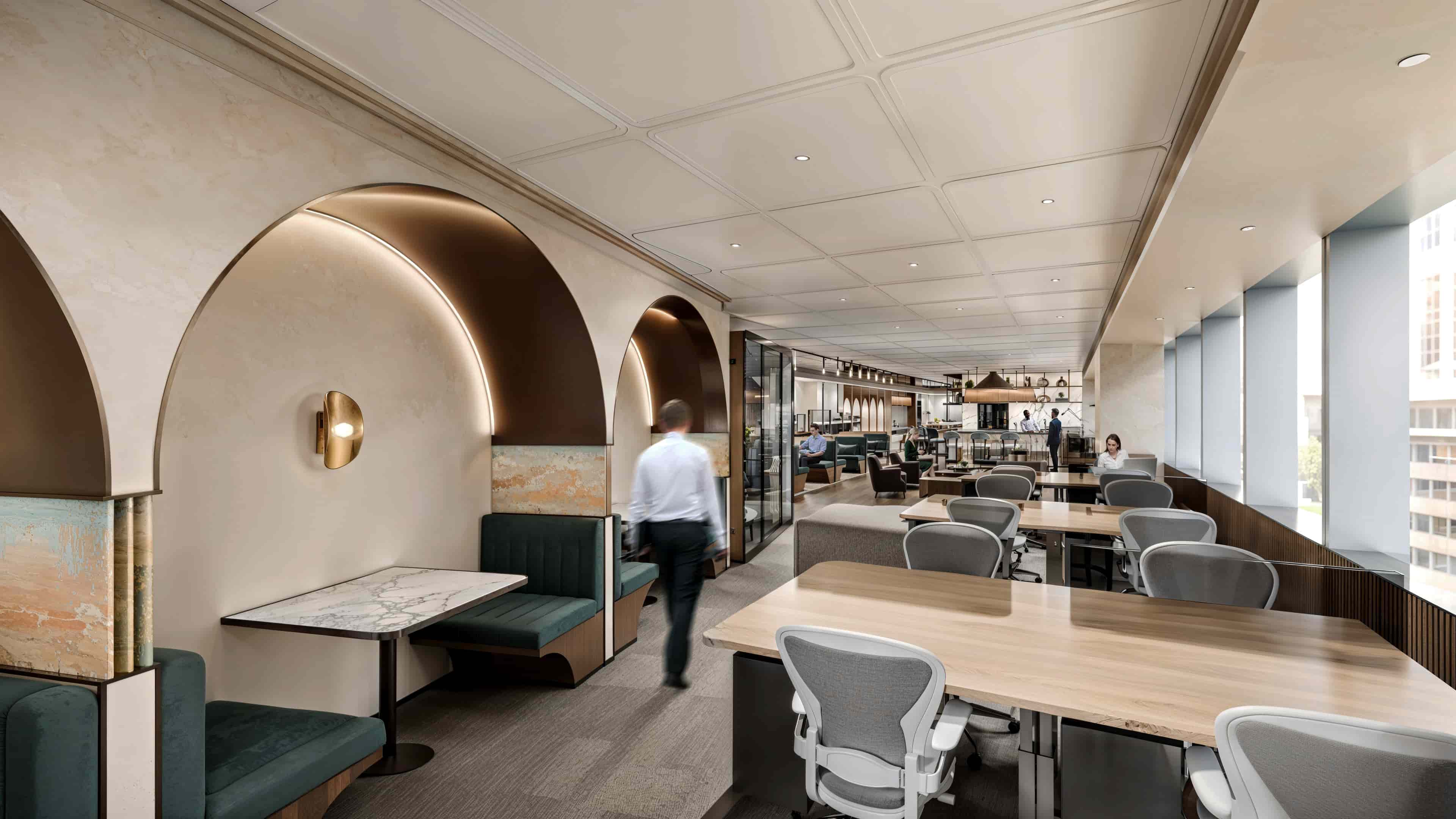
It is a shared professional environment where individuals and businesses can access desks, lounges and common areas within a wider workspace. The model provides access to a professional setting without requiring a permanent office.
Depending on the arrangement, a coworking space may include hot desks, lounge areas, networking spaces, private phone booths, high-speed connectivity, meeting-facility access and refreshment areas.
This model can suit professionals who need workspace on selected days, spend much of their time meeting clients elsewhere, are building an initial presence in Riyadh, or work as part of distributed teams. For example, a business development manager who spends most of the week visiting clients across the city may use coworking between appointments rather than maintaining a dedicated office.
Private Office vs Coworking: What Is the Difference
Consideration | Private Office | Coworking Space |
Workspace | Dedicated | Shared |
Privacy | Greater control | Open environment |
Focus | Fewer distractions | More activity around you |
Team continuity | Consistent team base | More fluid seating |
Flexibility | Dedicated arrangement | Greater day-to-day adaptability |
Cost | Higher dedicated-space commitment | Lower workspace commitment |
Contract length | Longer-term arrangement | More flexible terms |
Client-facing use | Greater control over surroundings | Meeting facilities available as needed |
Team size | Established teams | Individuals and distributed teams |
Networking | Team-focused environment | Greater interaction with other professionals |
Best suited to | Established teams and privacy-sensitive work | Individuals, distributed teams and variable schedules |
Which Workspace Is Right for Your Business
The right option depends on how your business operates today and what it expects from its workspace as it grows.
Choose a Private Office If
Your core team works together regularly
You need a consistent setting for collaboration
Confidential work is part of daily operations
You regularly host clients, partners or senior stakeholders
Your headcount is growing and shared seating is becoming less practical
Your Riyadh operation requires dedicated capacity
Choose Coworking If
You work independently or have a small local team
Your attendance varies from day to day
Employees work across multiple locations
You spend significant time outside the office
You are entering the Riyadh market with a small team
Your current requirements do not justify dedicated capacity

What Should You Consider When Choosing a Workspace in Riyadh?
For companies entering or expanding in Saudi Arabia, the decision extends beyond the physical setup itself.
Professional Presence
Consider whether the location and facilities are suitable for partner meetings, client appointments, recruitment interviews and visits from overseas executives. A KAFD location places businesses within Riyadh's established financial and commercial district, while a professionally managed environment can support these interactions.
Getting People There Easily
Employees, clients and visiting executives may travel from different parts of Riyadh, making accessibility an important practical consideration. Consider how easily the location can be reached by employees and visitors throughout the working day.
Operational Readiness
Companies entering a new market may not want to spend their early months coordinating furniture, connectivity, facilities and workplace administration. Assess whether essential infrastructure and support are already available, including reliable connectivity, meeting facilities and professional reception services.
Client and Team Requirements
The environment should accommodate more than individual desk work. Consider whether suitable spaces are available for internal discussions, client appointments, interviews and other professional activities, particularly if the Riyadh team regularly receives visitors.
Room for Changing Requirements
Headcount, attendance patterns and client-facing activities can shift as a Saudi operation develops. Access to different formats, including coworking areas, private offices and meeting facilities, can make it easier to adjust capacity as the local operation takes shape.
Can You Start With Coworking and Move to a Private Office?
Workspace needs can change as a Riyadh operation develops. A company entering the market with a small local team may initially need limited desk capacity while assessing hiring plans and establishing its operations.
As the team grows and regular collaboration becomes more important, a private office may become a more suitable long-term base. Where both formats are available, businesses can potentially adjust their arrangement as their needs evolve rather than treating the initial choice as permanent.
Any move between formats depends on availability, commercial terms and the specific arrangement, so these should be confirmed before committing.
Why KAFD Can Be a Practical Workspace Location
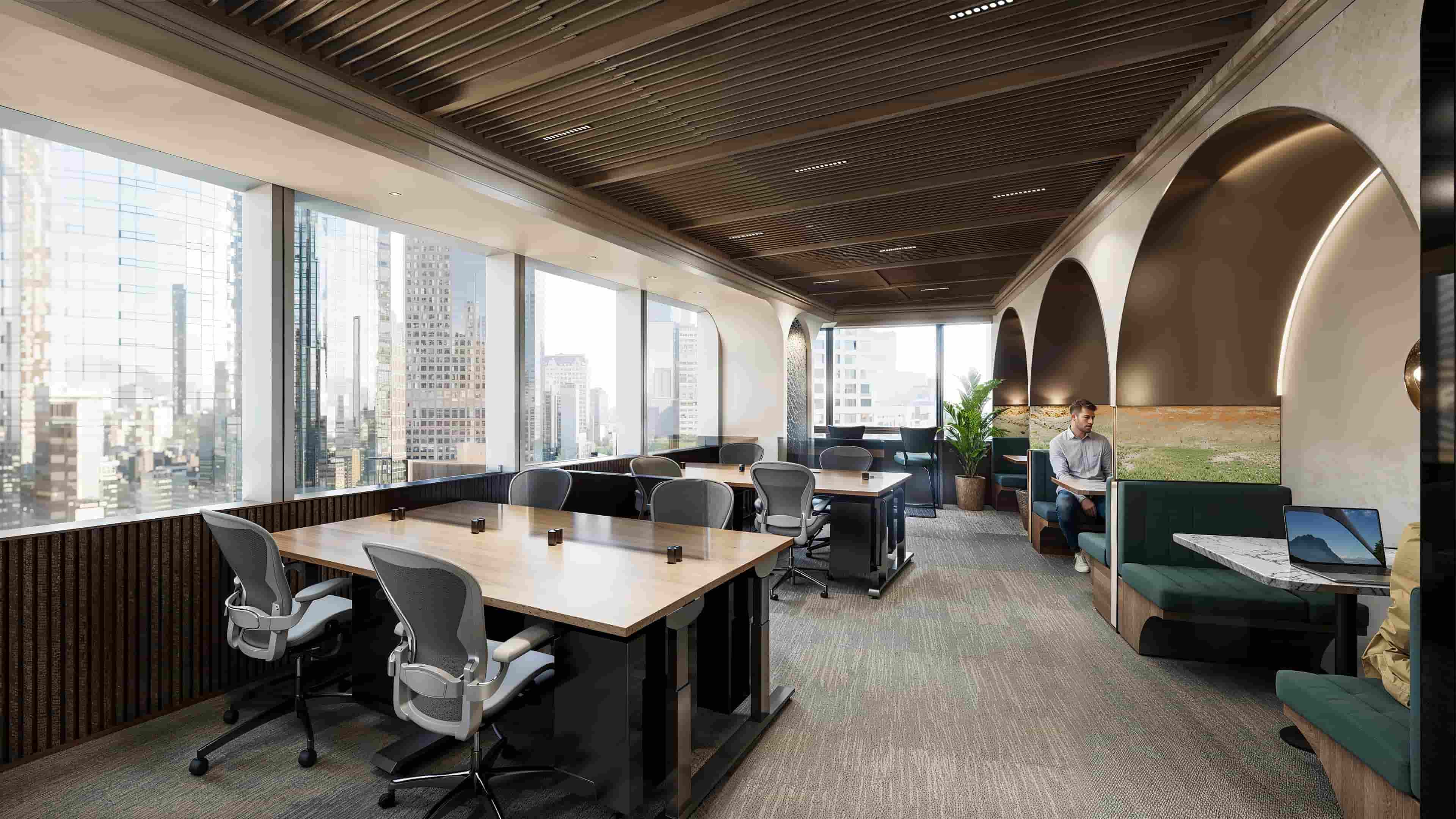
KAFD is one of Riyadh's major business hubs, bringing together offices, financial institutions, retail, dining and events within an integrated area.
For companies working with banks, funds, professional services firms or other organisations based in the district, proximity can reduce travel between appointments. Its pedestrian network includes 42 elevated skywalks connecting buildings across the district, alongside KAFD Metro Station.
The surrounding business and lifestyle amenities can also benefit companies receiving external visitors, with meetings, dining and other activities available within the same area.
For businesses establishing a Riyadh presence, this combination of commercial proximity, connectivity and amenities makes KAFD a practical location to consider.
Deciding Between Private Office or Coworking Space in Riyadh
The right workspace depends on how your business operates today and what it needs from a professional base. Consider factors such as team structure, working patterns, privacy, client-facing activity and the level of adaptability required before making a decision.
For some businesses, a private office may provide the consistency needed for an established team, while others may benefit from the flexibility of coworking as their Riyadh presence takes shape. The important point is to choose an arrangement that supports current operations while leaving room to adapt as the business develops.
Private Office
Coworking Space

Ketan specialises in flexible office solutions across the UAE and Saudi Arabia. With a background as VP at Barclays leading strategic transformation and flex office initiatives, he brings deep knowledge in corporate real estate and business growth across the region.
Table of Content
Frequently Asked Questions
What are the legal or registration requirements for securing an office space in Saudi Arabia?
Businesses establishing a presence in Saudi Arabia may need a registered business address as part of their licensing or registration requirements. The exact requirements depend on the company's legal structure, activity and regulatory authority. Businesses should confirm the address and documentation requirements with the relevant Saudi authorities before selecting a workspace.
Are utilities, internet and maintenance included in private office packages in Riyadh?
Yes. Private office packages can include high-speed internet, utilities, cleaning and facilities management, depending on the package. These services can simplify day-to-day office administration by keeping essential workplace requirements within one arrangement. Exact inclusions and any additional charges should be confirmed before signing.
Can coworking members book meeting rooms when they need them?
Many coworking arrangements provide access to meeting rooms either as part of the membership or for an additional fee. Availability, booking rules, included hours and charges vary by package, so these terms should be checked before choosing a membership.
How does office parking work in KAFD?
Parking arrangements vary depending on the building, workspace and membership. At the KAFD centre, parking options are available for eligible users, while KAFD Metro Station provides an alternative for employees and visitors using public transport. Businesses should confirm parking access and any applicable terms when selecting their workspace.
How do workspace providers accommodate after-hours access?
After-hours access can be important for international teams working across different time zones. Private office and coworking arrangements may offer extended access, subject to the applicable access terms. Businesses should confirm access hours, security arrangements and any restrictions that may affect employees working outside standard business hours.
Related Articles

Shareek Program Marks New Era for Saudi Private Sector
Industry Insights
Professional Development
Coworking Space
ROSHN Riyadh: Bridging Innovation & Community in Saudi Housing
Industry Insights
Sustainability
Meeting and Events

Discovering the Diriyah Project: History, Vision & Transformation
Industry Insights
Lifestyle
Community News

Oxagon NEOM: Redefining Industry and Innovation on the Red Sea
Industry Insights
Sustainability